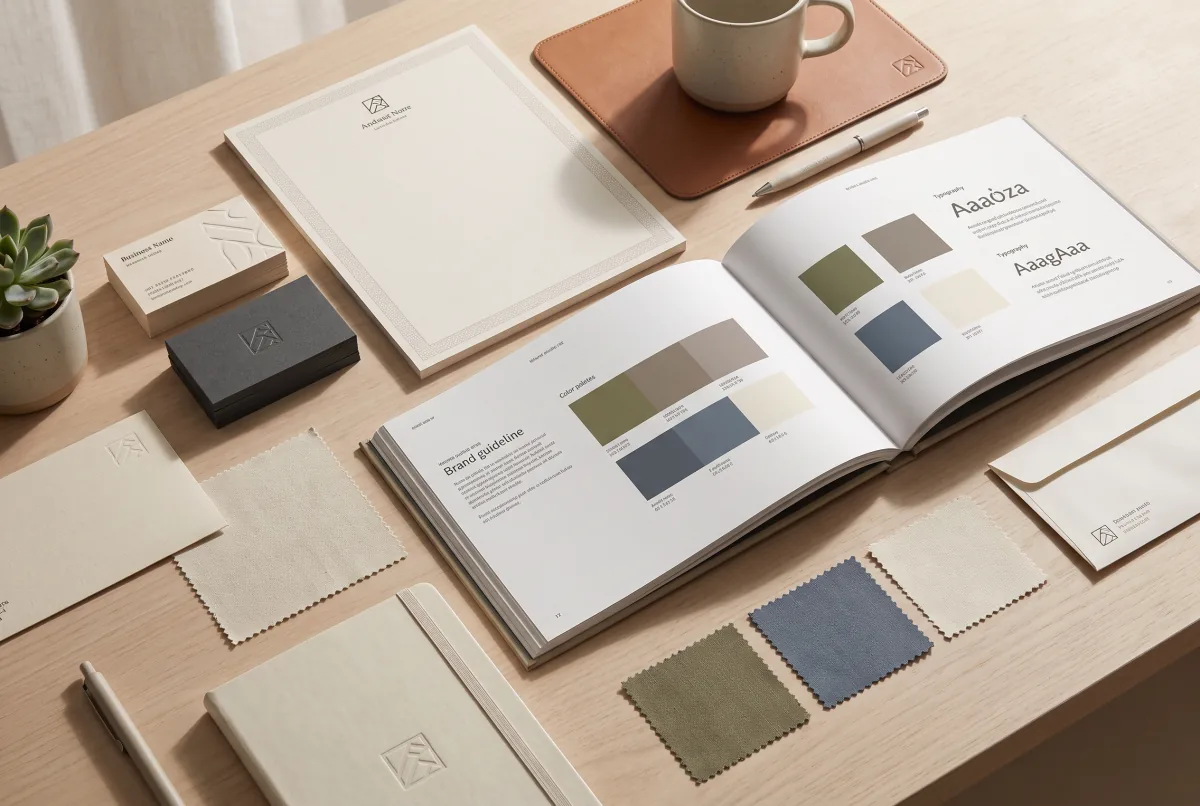
Most brands are not badly designed. They are inconsistently applied.
The website says one thing, the proposal template says another, and the Instagram grid belongs to a different company entirely. Every inconsistency spends a little of the recognition you paid to build.
A brand identity system fixes that by making the decisions once, writing them down, and giving everyone (designers, printers, your own staff) a single source of truth to work from.
Defined positioning and audience
Verbal identity: voice, tone and messaging pillars
Visual identity: logo system, palette, typography, imagery
Application templates for the things you make weekly
A guidelines document that settles arguments
Why it is necessary
What a documented identity actually buys you
01
Faster decisions
When the palette, type scale and tone are already settled, everything downstream ships quicker, and stops going back and forth over taste.
02
Cheaper production
Templates and defined assets mean your team is not paying a designer to reinvent a social post or a proposal cover every week.
03
Premium positioning
Consistency reads as competence. Brands that look coherent can defend higher prices than brands that look improvised.
04
Easier hiring and onboarding
A new marketer or agency can be productive in a day instead of a month when the rules are written down.
05
Compounding recognition
Every consistent touchpoint reinforces the last. Inconsistent ones reset the counter.
Brand story
The story is the strategy
Before we choose a single colour we work out what you are actually claiming: what you do that the alternatives do not, who that matters to, and why they should believe you.
That comes out of a structured workshop with your team, not a survey. We pressure-test the claim against your competitors and your actual customers, then write it as a positioning statement, a set of messaging pillars and a voice guide your team can write from.
Everything visual is then designed to serve that claim. Which is why the identity ends up feeling inevitable rather than decorative.
Half-day positioning workshop
Competitor and category audit
Positioning statement and value proposition
Three to five messaging pillars
Voice and tone guide with worked examples
Branding Packages
Identity systems at three depths
Every package ends with a guidelines document and the source files, licensed entirely to you.